Language Areas: Broca & Wernicke
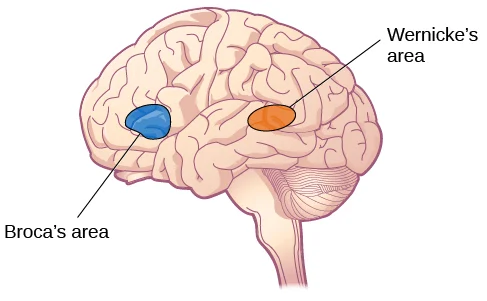
Language Areas: Broca & Wernicke
Language is one of humanity’s most remarkable abilities — allowing us to share ideas, express emotions, and build societies. Deep within the brain lie two critical regions responsible for this power: **Broca’s area** and **Wernicke’s area**. These two centers work together to enable speech production, comprehension, and meaningful communication. Understanding how they function reveals the incredible coordination between thought and expression that defines human intelligence.
Broca’s Area – The Speech Production Center
Broca’s area is located in the **left frontal lobe**, near the region that controls facial and tongue movements. Named after French physician Paul Broca, who discovered it in the 1860s, this area is essential for **producing speech** and forming grammatically correct sentences. It organizes the words we speak and plans the muscle movements required to articulate them.
When Broca’s area is damaged — such as by a stroke or injury — a condition called **Broca’s aphasia** can occur. People with this disorder can understand language well but struggle to speak fluently. Their speech may be slow and broken, though their thoughts remain clear. For example, someone might say, “Want... water... please,” instead of “I would like some water, please.” This demonstrates how Broca’s area serves as the brain’s language planner and motor coordinator for speech.
Wernicke’s Area – The Language Comprehension Center
While Broca’s area helps us speak, **Wernicke’s area**, located in the **left temporal lobe**, helps us understand language. Named after German neurologist Carl Wernicke, this region processes the meaning of words and sentences. It enables us to comprehend spoken, written, and even signed language.
Damage to Wernicke’s area causes **Wernicke’s aphasia**, a condition in which speech remains fluent but loses meaning. People with this disorder might speak in long sentences filled with unnecessary or invented words, unaware that others cannot understand them. For example, they might say, “The grass runs over the apple,” when attempting to describe something unrelated. This condition highlights the importance of Wernicke’s area in language comprehension and meaningful communication.
How Broca’s and Wernicke’s Areas Work Together
These two regions are connected by a bundle of nerve fibers known as the **arcuate fasciculus**, which acts as a communication bridge. When you listen to someone speaking, Wernicke’s area first interprets the words and meaning. Then, Broca’s area formulates an appropriate response and sends motor signals to the mouth, tongue, and larynx to produce speech.
This seamless interaction happens in fractions of a second, allowing you to hold conversations effortlessly. If the connection between these areas is damaged, a person may understand what is said but struggle to repeat it correctly — a condition called **conduction aphasia**. It’s like having two well-functioning stations with a broken wire between them.
Language and the Brain’s Hemispheres
For most people, language is **left-lateralized**, meaning it’s primarily controlled by the left hemisphere. However, the **right hemisphere** also contributes by interpreting tone, pitch, rhythm, and emotional context — the nuances that make communication expressive and human. This cooperation ensures that speech is not only grammatically correct but also emotionally meaningful.
In bilingual individuals, Broca’s and Wernicke’s areas adapt to handle multiple languages, sometimes sharing neural circuits or developing distinct networks for each. This flexibility showcases the brain’s remarkable **neuroplasticity** — its ability to adapt based on experience and learning.
Development of Language in the Brain
Language development begins early in life. Infants first recognize rhythm and tone before learning actual words. As they grow, Broca’s area develops control over articulation, while Wernicke’s area strengthens its ability to link words to meaning. By around age three, both regions work together smoothly, allowing children to form full sentences and understand others.
Language learning doesn’t stop in childhood, though. Throughout life, the brain continues to refine these circuits through reading, conversation, and exposure to new languages. This ongoing adaptation demonstrates how dynamic and flexible the human language system truly is.
Disorders and Recovery
Language disorders such as aphasia often occur after brain injuries or strokes. Recovery depends on the extent of damage and therapy. Speech therapy can help retrain the brain to use undamaged areas or even rewire connections between hemispheres. Modern neuroimaging and brain stimulation techniques are helping scientists understand how to restore language function more effectively.
Interestingly, in young children, damage to one hemisphere may not permanently impair language because the opposite hemisphere can take over. This ability decreases with age but highlights the brain’s incredible capacity for adaptation and repair.
The Miracle of Communication
Every time you speak, read, or listen, you’re witnessing Broca’s and Wernicke’s areas working together in perfect harmony. They transform thoughts into words and words into understanding — bridging minds through communication. This collaboration is one of the defining traits of human intelligence, creativity, and connection.
Key Takeaways
- Broca’s area: Located in the left frontal lobe, it plans and controls speech production and grammar.
- Wernicke’s area: Located in the left temporal lobe, it processes and interprets language meaning.
- Arcuate fasciculus: A neural pathway connecting both areas, enabling smooth communication and repetition.
- Example: When someone asks a question, Wernicke’s area understands the meaning, and Broca’s area constructs your reply.
- Disorders: Damage to Broca’s area causes broken speech; damage to Wernicke’s causes fluent but nonsensical language.
- Right hemisphere’s role: Adds emotional tone, rhythm, and context to speech, making it expressive and natural.
- Neuroplasticity: The brain can reorganize and recover language function after injury through therapy and adaptation.
- Analogy: Broca’s and Wernicke’s areas are like two partners in conversation — one shapes the words, the other understands them, creating true communication.
Disclaimer: These pages are for education only and do not replace professional advice.