Introduction to Brain Lobes
Introduction to Brain Lobes
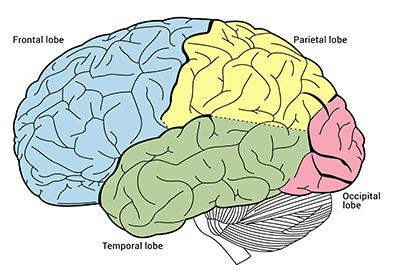
The human brain is one of the most fascinating and complex organs in the body. It acts as the command center for every thought, emotion, and movement that defines our daily lives. Understanding the brain’s structure helps us appreciate how different parts work together to produce speech, memory, creativity, and coordination. One of the most important ways to study the brain is by examining its four major lobes — the frontal, parietal, temporal, and occipital lobes. Each of these regions contributes unique functions that combine seamlessly to shape our personality and behavior.
The Frontal Lobe – The Executive Center
Located behind the forehead, the frontal lobe is the largest and one of the most vital parts of the brain. It manages high-level cognitive processes that distinguish humans from other species, including planning, reasoning, problem-solving, emotional regulation, and decision-making. The frontal lobe also controls voluntary muscle movements through the motor cortex, a strip of neurons that sends signals to various parts of the body.
Another key area within the frontal lobe is Broca’s area, which plays a major role in speech production. Damage to this area can lead to Broca’s aphasia, a condition in which people understand language but struggle to form coherent sentences.
The prefrontal cortex, located at the very front of the frontal lobe, is often considered the seat of personality and impulse control. It helps us pause and think before acting, weigh long-term consequences, and empathize with others. This region continues to develop into early adulthood, which is why teenagers often find it harder to manage risk or emotions.
The Parietal Lobe – The Sensory Integrator
Situated near the top and back of the brain, the parietal lobe serves as the hub for sensory information. It interprets signals from touch, temperature, and pain receptors throughout the body. The somatosensory cortex, located within this lobe, maps sensations to specific body parts — for example, allowing you to identify an object by touch even with your eyes closed.
Beyond basic sensory functions, the parietal lobe also plays a role in spatial awareness and navigation. It allows us to judge distance, understand shapes, and coordinate movements in relation to our surroundings. When this lobe is damaged, individuals may experience difficulties recognizing their own body orientation or navigating familiar places, a condition known as spatial neglect.
In daily life, the parietal lobe helps you catch a ball, estimate how far a cup is from your hand, or type on a keyboard without looking at each key — a true multitasking marvel of sensory integration and coordination.
The Temporal Lobe – The Memory and Sound Processor
The temporal lobe, located on each side of the brain near the ears, handles auditory processing, language comprehension, and memory formation. Within this lobe lies Wernicke’s area, responsible for understanding spoken and written language. When it is damaged, a person may speak in fluent but meaningless sentences — a condition called Wernicke’s aphasia.
Another crucial structure housed within the temporal lobe is the hippocampus, which plays a central role in converting short-term memories into long-term storage. This is why injury to the temporal region or disorders like Alzheimer’s disease often impair memory.
The temporal lobe also supports emotional interpretation, allowing us to associate certain sounds or words with feelings and memories. For example, hearing a favorite song can instantly transport you back to a childhood moment — an emotional response that merges sound and memory through temporal lobe activity.
The Occipital Lobe – The Visual Interpreter
At the back of the brain lies the occipital lobe, the visual processing powerhouse. It receives input directly from the eyes via the optic nerve and interprets these signals to form images. The primary visual cortex decodes light, color, shape, and motion, helping you identify and respond to visual stimuli.
Without the occipital lobe’s coordinated processing, daily tasks like reading, recognizing faces, or avoiding obstacles would be impossible. Interestingly, this lobe not only interprets what you see but also integrates visual information with memories stored in other lobes — for instance, recognizing your friend’s face or recalling the look of your favorite book cover.
Damage to the occipital lobe can result in partial or complete vision loss, or in some cases, visual agnosia, where a person can see objects but cannot recognize what they are.
How the Lobes Work Together
While each lobe has specialized roles, the brain works best when they operate as a unified system. Everyday actions require collaboration between multiple regions. For example, reading a sentence involves: the occipital lobe recognizing the letters and words, the temporal lobe understanding their meaning, the frontal lobe constructing a response, and the parietal lobe coordinating the movement of your eyes and hands if you take notes.
This teamwork demonstrates the brain’s interconnected nature. Messages constantly travel through neural networks that link lobes to one another, allowing complex behaviors to unfold smoothly in fractions of a second.
Protecting and Strengthening Your Brain
Just as muscles grow stronger with use, brain function benefits from regular exercise and care. Activities like puzzles, reading, or learning new skills keep the frontal and parietal lobes active. Listening to music or practicing mindfulness supports the temporal lobe, while spending time outdoors or exploring art stimulates visual processing in the occipital lobe.
Equally important are adequate sleep, hydration, nutrition, and physical activity, all of which enhance neural health and plasticity. Helmets during sports or cycling protect the brain’s delicate structure from injuries that could affect one or more lobes.
Key Takeaways
- Four major lobes: Frontal (thinking and movement), Parietal (sensation and spatial awareness), Temporal (hearing and memory), and Occipital (vision) — each responsible for unique yet interconnected functions that make up human behavior.
- The brain works as one unit: Every lobe performs distinct tasks but depends on others for smooth, coordinated actions like speaking, reading, or balancing.
- Frontal lobe: Manages decision-making, emotions, problem-solving, and voluntary body movements, helping us plan and act responsibly.
- Parietal lobe: Integrates sensory information from different parts of the body to guide perception, touch, and spatial awareness.
- Temporal lobe: Handles sound interpretation, language comprehension, and the creation and storage of long-term memories.
- Occipital lobe: Processes and interprets visual information, helping us recognize faces, colors, and movement in our surroundings.
- Healthy habits matter: Mental exercise, balanced nutrition, quality sleep, and proper safety measures such as wearing helmets preserve brain function and long-term health.
- Awareness builds care: Understanding how each brain region works encourages appreciation, mindfulness, and better protection of the organ that defines who we are.
Disclaimer: These pages are for education only and do not replace professional advice.